


GUIDE FOR
The United States of America has long been one of the world’s top destinations for expats, students, professionals, and entrepreneurs. With its diverse landscapes, world-famous cities, countless opportunities, and multicultural population, the U.S. offers a lifestyle unlike any other. Whether you’re drawn to the vibrant streets of New York City, the tech innovation of Silicon Valley, the sunshine of Florida, or the relaxed West Coast atmosphere, the country has something for everyone.
To make the most of your relocation, it’s important to understand American culture, lifestyle, work environment, costs, and practical logistics.
This guide gives you an overview of life in the United States, including culture, work life, basic English phrases, and helpful relocation tips.
How much does it cost to move to the United States?
Moving to the U.S. can vary greatly in cost depending on where you're relocating from, the size of your shipment, and your chosen transportation method. Here are typical international moving cost ranges:
Average moving costs by region of origin
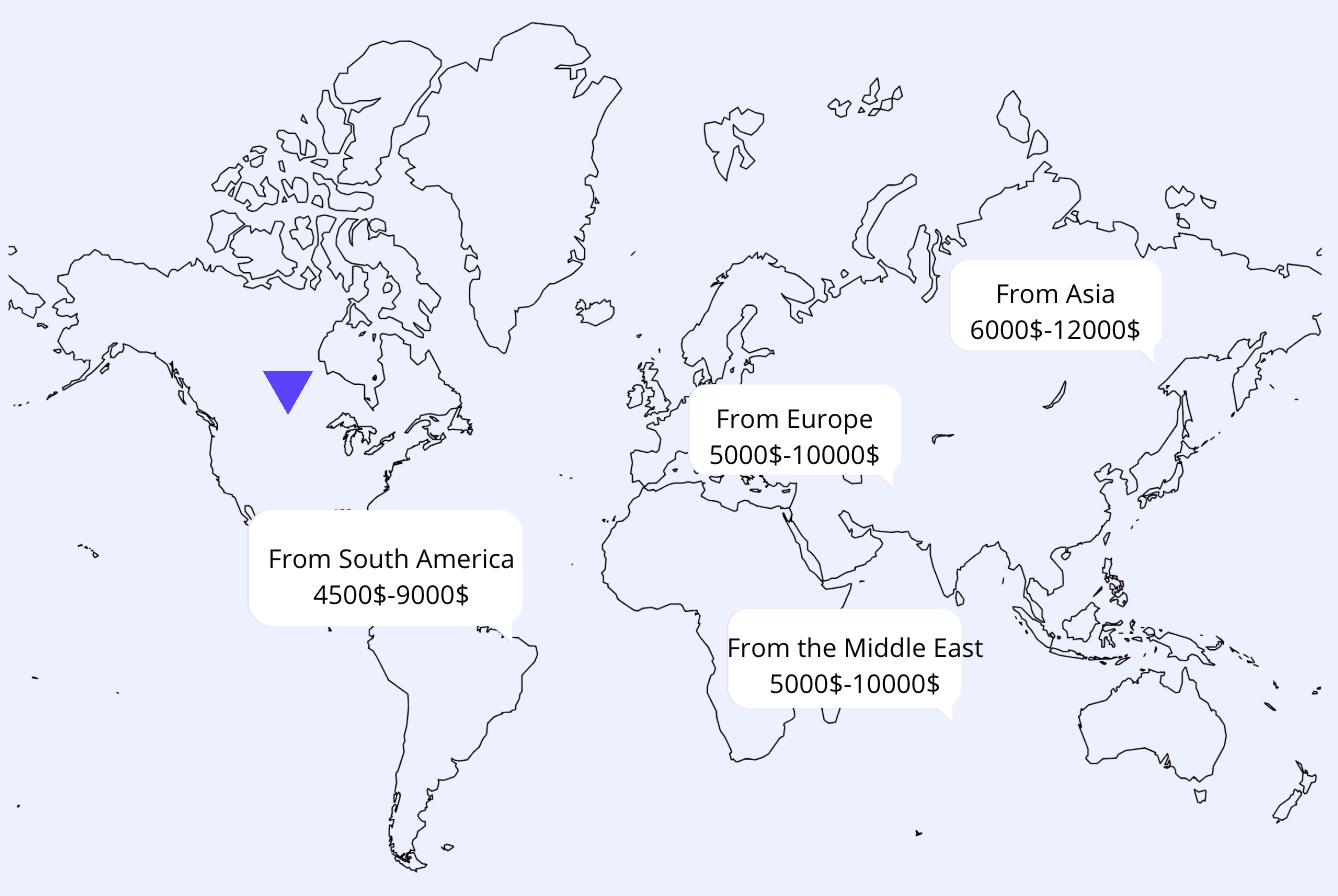
From Europe: €5000 – €10,000
From South America: €4,500 – €9,000
From Asia: €6,000 – €12,000
From the Middle East: €5000 – €10,000
Prices vary depending on shipment volume, whether you use groupage or a full container, and additional moving services such as packing, customs handling, pet relocation, insurance, or temporary storage.
Factors that influence your moving cost
Origin country and distance
Volume of household goods (m³)
Transport method:
Sea freight – most economical
Air freight – fastest but more expensive
Seasonality: higher demand in summer
Extra services: packing, customs clearance, insurance, vehicle transport, pets, storage
Typical examples
Move from the UK to New York City with 10 m³: €4,500 – €6,000
Couple relocating from France to Los Angeles with 20 m³: €7,000 – €9,500
Family moving from Australia to Texas with 30 m³: €9,000 – €13,000
For a precise calculation, a custom moving quote is always the best solution.
A Glimpse into the United States
Geography and climate
The United States is one of the world’s largest and most geographically diverse countries. Its landscapes include:
snowy mountains in Colorado and Alaska
sunny coastlines in California and Florida
deserts in Arizona and Nevada
forests and lakes in the Midwest
cultural urban hubs across the East and West coasts
Because of this diversity, the climate varies dramatically:
Northeast: cold winters, warm summers
South: hot, humid summers and mild winters
West Coast: mild year-round with dry summers
Midwest: four distinct seasons, including snowy winters
Southwest: hot, dry desert climate
No matter your preference, there's an American region that fits your lifestyle.
A snapshot of history
The United States has a relatively young but influential history, shaped by immigration, independence, innovation, and global leadership.
Key historical highlights:
Indigenous civilizations: long before European settlement
Colonial period: 1600s–1700s
American Revolution (1776): independence from Britain
19th century: westward expansion, industrialization
20th century: the U.S. became a world power after WWII
Modern era: known for technological innovation, cultural impact, and economic leadership
American history continues to influence its identity, making it a uniquely diverse and dynamic country.
Diving into American culture
American culture is shaped by diversity, individualism, innovation, and community spirit.
Food and drink
American cuisine varies greatly by region. Popular dishes include:
burgers, BBQ, and fried chicken
Tex-Mex cuisine
seafood (New England clam chowder, Louisiana crawfish)
soul food
international cuisines from immigrant communities
Dining out is common, with a huge variety of restaurants across all price ranges.
Festivals and holidays
The U.S. celebrates a mix of cultural, national, and regional holidays:
Thanksgiving: one of the biggest national holidays
Fourth of July: Independence Day celebrations
Halloween: costumes, decorations, and festivities
Mardi Gras (New Orleans)
Music & arts festivals: Coachella, Lollapalooza, and more
Events vary widely across states and cities, reflecting the country’s diversity.
Lifestyle and social norms
Everyday life in the U.S. is shaped by values such as:
Friendliness and openness: people often engage in casual conversation
Individualism: independence and personal achievement are valued
Convenience culture: 24/7 services, drive-thrus, large supermarkets
Car-oriented living: especially outside major cities
Tipping culture: standard in restaurants, taxis, and personal services
Work–life balance: varies by industry, though improvements are ongoing
The diversity of lifestyles means no two regions feel the same.


Working in the United States
The U.S. offers one of the largest and most dynamic job markets in the world.
Business culture
Merit-based and performance-focused
Fast-paced and innovation-driven
Direct communication is common
Networking is highly valued
Professional environments vary greatly by industry
Job opportunities for expats
Technology (Silicon Valley, Seattle, Austin)
Finance (New York, Chicago)
Healthcare and medical research
Aerospace and engineering
Education and academia
Entertainment and creative sectors
Manufacturing and logistics
Remote work is also widely available across many industries.
English made simple
While English is the primary language across the U.S., regional accents and slang vary. Learning basic phrases helps with everyday interactions.
Common English phrases
English | Meaning |
|---|---|
Hello | A universal greeting |
Goodbye | Farewell |
Thank you | Expression of gratitude |
Please | Polite request |
How are you? | Common friendly question |
I don’t understand | Useful in conversations |
Where is the nearest…? | Asking for directions |
Can you help me? | Request for assistance |
How much does this cost? | Useful when shopping |
Do you speak another language? | Helpful in multicultural areas |
Even basic English fluency will help you navigate daily life comfortably.
Final thoughts
The United States offers endless opportunities for adventure, growth, and new beginnings. From world-renowned cities and universities to awe-inspiring national parks and a culture that celebrates diversity, the U.S. has something for everyone. Whether you're relocating for career advancement, education, family, or a fresh start, America’s energy and diversity make it an exciting place to call home.
Welcome to the United States!
Sponsors

APRIL International provides flexible international health insurance for expats, travelers, students, and businesses, offering worldwide coverage and easy access to quality healthcare.

Our currency exchange service helps individuals buying, selling, or maintaining overseas property with secure international payments and competitive exchange rates.

Abroad Experience connects international professionals with multilingual career opportunities in the Netherlands, offering recruitment support and career guidance.

ActiveQuote is a health insurance comparison platform that helps individuals and businesses easily compare and choose the right health plans.

Aetna provides comprehensive health insurance plans for individuals, families, and businesses, including medical, dental, vision, and wellness solutions worldwide.

We connect people and businesses across cultures and languages, helping organizations build strong international relationships and expand globally.

AIMS provides immigration and relocation services, specializing in visas, residency, investment migration, and global mobility solutions across Asia.

American Home Insurance Agency offers personalized home, auto, and recreational vehicle insurance, helping customers compare coverage from multiple insurance providers.

APRIL International provides flexible international health insurance for expats, students, travelers, and businesses, offering worldwide medical coverage and digital support.

Apt Wealth Partners provides personalized wealth management, financial planning, and investment advice to help individuals, families, and businesses achieve their financial goals.
Load More


Start now