

Relocating, especially across borders, is one of the most complex personal projects most people will ever manage. While distance, customs procedures, and timelines often receive the most attention, one of the biggest drivers of cost, stress, and logistical complexity is far more personal: how much you decide to take with you.
Many relocations become more expensive and more exhausting not because of where people are going, but because they move far more than they actually need. Years of accumulated belongings turn into extra boxes, higher shipping volumes, longer packing days, and difficult decisions made under pressure. What starts as “better safe than sorry” often ends as “why did we move all this?”
Downsizing before a big move is not about extreme minimalism or starting over with nothing. It is about making deliberate, informed choices that reduce shipment size, lower moving costs, and make the transition into your new home smoother. Done well, downsizing reduces stress before the move and regret after it.
This guide explains why downsizing matters so much during a relocation, how to use a simple and realistic system for selling, donating, and keeping essentials, and how these decisions directly support choosing the right mover through Relocately. In this article, we’ll cover:
Why Most Households Move More Than They Need
The Real Cost of Clutter During a Relocation
A Simple Downsizing System: Sell, Donate, Keep
What to Keep (and What Usually Isn’t Worth Moving)
How Downsizing Helps You Choose the Right Mover on Relocately
A Minimalist Downsizing Plan (Low Effort, High Impact)
The Bigger Picture: Why Less Stuff Makes for a Better Move
Why Most Households Move More Than They Need
Over time, households naturally accumulate more than they actively use. Storage space expands, routines change, and items are kept “just in case.” Closets, garages, spare rooms, and storage units quietly fill with objects that no longer play a meaningful role in daily life.
Research frequently cited by professional organizing and housing studies suggests that many households regularly use only 20–30% of their belongings, with the rest stored out of sight. While this rarely causes problems during everyday life, relocation changes everything.
A move forces visibility. Every object must be:
Touched
Categorized
Protected
Transported
And paid for in some way
What once felt harmless or invisible suddenly becomes a logistical and financial decision.
Another reason people move too much is emotional timing. Relocations often coincide with career changes, family transitions, or major life decisions. When time is limited, it is easier to pack everything than to decide thoughtfully. Downsizing before the move allows you to make these decisions calmly and proactively, instead of under the pressure of booking deadlines and packing schedules.
The Real Cost of Clutter During a Relocation
Moving costs scale directly with shipment size and weight. International household moves can range from a few thousand to well over ten thousand dollars, with volume being one of the primary pricing drivers. Even modest increases in cubic meters can affect:
Whether you need a full container or shared shipment
How many days packing and loading will take
Whether storage is required
The final cost of customs handling and delivery
Beyond direct costs, clutter introduces indirect but very real burdens throughout the relocation process.
The Hidden Costs of Moving Too Much
Extra belongings almost always create compounding costs throughout a relocation, many of which are not obvious at the quoting stage. Each additional item requires packing materials such as cardboard boxes, plastic wrap, and protective fillers, increasing both material usage and waste. As volume grows, packing and loading take longer, which directly raises labor costs and often extends the number of days required to complete the move.
More items also increase the risk of damage. When timelines tighten, lower-priority belongings are more likely to be packed quickly or inefficiently, making them vulnerable during transport. Larger shipments are also more likely to require temporary storage, especially when international moves involve customs delays, housing gaps, or shifting arrival dates. Storage adds cost, handling, and additional opportunities for damage or loss.
The impact continues after arrival. A home filled with boxes takes longer to unpack, slowing the transition into daily life and making an already demanding period more mentally and physically exhausting. Instead of settling in, many movers spend weeks managing clutter they no longer truly need.
In other words, clutter does not just cost money. It consumes time, energy, and peace of mind at every stage of the relocation. Downsizing reduces pressure across the entire moving process, not just the final invoice, making the move simpler, more predictable, and far less stressful.
A Simple Downsizing System: Sell, Donate, Keep
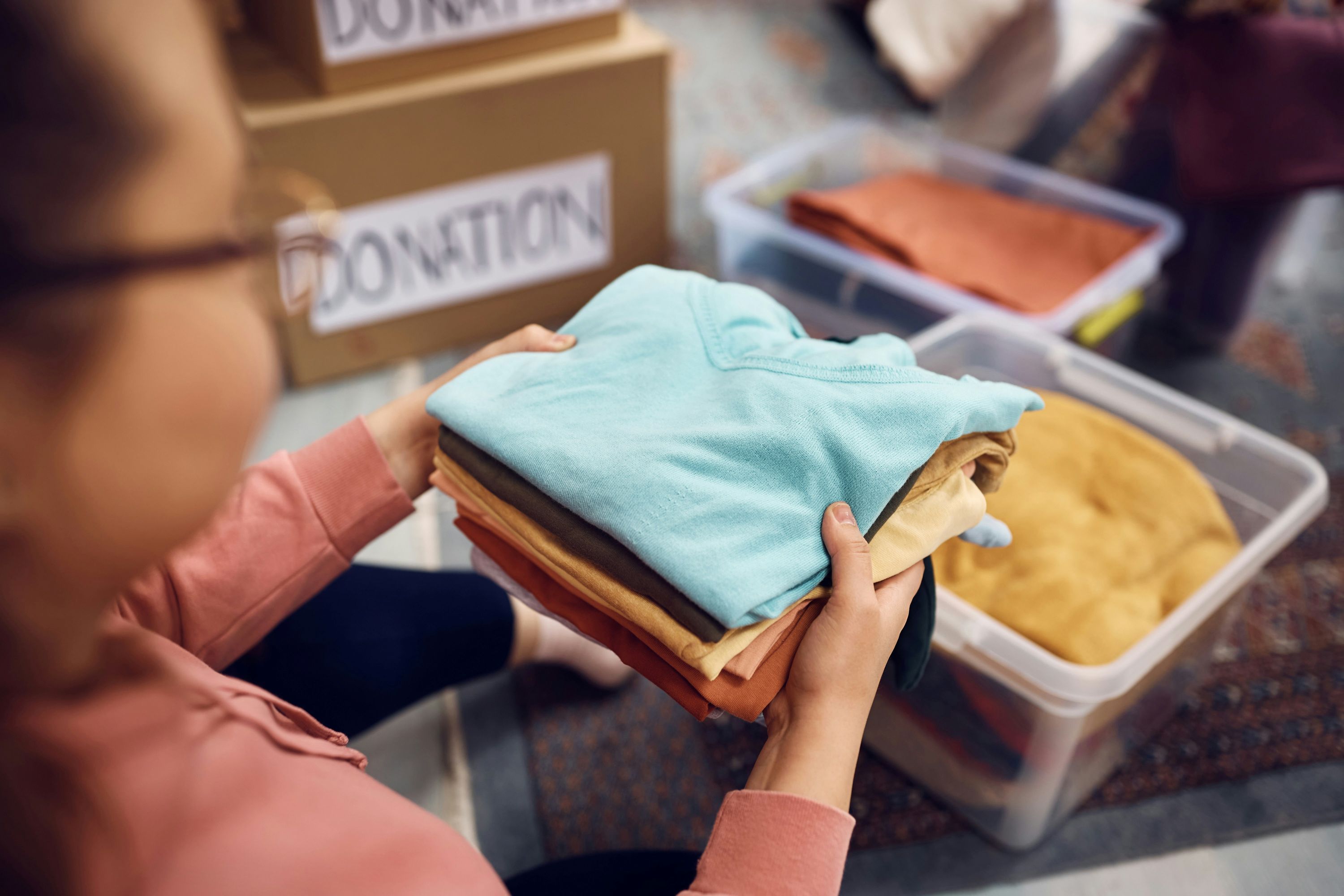
The most effective downsizing approach is simple, repeatable, and emotionally realistic. Complex decision frameworks often lead to fatigue and stalled progress. A clear three-category system keeps momentum without forcing perfection.
1. Sell: Convert Unused Items Into Flexibility
Selling items before a move reduces shipment volume while creating extra budget flexibility. Furniture, electronics, sports equipment, décor, and household items that no longer suit your next home or lifestyle are often easier to sell locally than to ship internationally.
A useful question to ask is:
“Would I pay to ship this item if I were buying it today?”
If the answer is no, selling is usually the smarter choice.
The money recovered from selling can:
Offset moving costs
Cover temporary housing
Pay for replacement items after arrival
Reduce financial pressure during the transition
Selling also creates emotional closure. Instead of discarding items hastily, you consciously transfer them to someone who will use them.
2. Donate: Reduce Volume Without Waste
Donation is often the fastest and least emotionally taxing way to downsize. Clothes, books, kitchenware, and household items can benefit others while rapidly reducing the number of items you need to manage.
From a relocation perspective, donated items disappear from your logistics plan entirely. They no longer need to be packed, insured, shipped, stored, or unpacked, and that simplicity is often more valuable than the item itself.
Donation also supports sustainability goals by extending product lifecycles and reducing unnecessary transport and manufacturing.
3. Keep: Focus on What Truly Supports Your Life
Items you keep should clearly earn their place in your shipment. This typically includes belongings that are difficult or expensive to replace, durable and consistently useful, or sentimental in a meaningful rather than habitual way. Keeping fewer but more intentional items often leads to greater satisfaction after arrival, and many people find that downsized moves make it easier to feel settled faster because they are surrounded only by things that truly matter.
What to Keep (and What Usually Isn’t Worth Moving)
Not all belongings carry the same value when relocation is involved. Some items consistently cost more to move than they are worth in use, resale, or replacement.
Items Often Not Worth Shipping
Certain categories almost always fall into the “replace later” group:
Low-cost, bulky furniture
Flat-pack furniture that weakens when disassembled and reassembled
Appliances incompatible with local voltage, plugs, or standards
Items not used in the past year
Decorative objects with little functional or emotional value
These items often increase shipment volume while offering limited long-term benefit.
Items Often Worth Keeping
Other items justify their space because of longevity or personal value:
High-quality furniture built to last decades
Sentimental or irreplaceable items
Professional tools or specialized equipment
Durable household items that would be costly or unsustainable to replace
Thinking in terms of long-term usefulness rather than ownership history leads to better decisions and fewer regrets.
How Downsizing Helps You Choose the Right Mover on Relocately
Downsizing before requesting quotes improves not only your costs, but the quality of your relocation decisions. Clear, reduced inventories lead to more accurate estimates and fewer surprises later.
When your shipment is oversized or uncertain, quotes are often padded with buffers. When your inventory is realistic and intentional, movers can price more precisely and recommend better options.
Relocately supports this process by allowing you to compare movers and relocation options in one place. With a right-sized shipment, you can more easily compare full-container versus shared shipment options, align timelines with cost-efficient transport methods, avoid paying for unused container space, and select movers whose service model matches your actual needs.
Better inputs lead to better comparisons, and better comparisons lead to better outcomes.
A Minimalist Downsizing Plan (Low Effort, High Impact)

Downsizing does not need to be overwhelming. A simple, phased approach delivers the biggest benefits with manageable effort.
Start earlier than you think you need to. Time prevents rushed, high-stress decisions.
Downsize before requesting quotes. Shipment size is one of the biggest cost drivers.
Use the sell–donate–keep system consistently. Avoid overthinking individual items.
Compare movers on Relocately with a clear, reduced inventory. Accurate inputs improve results.
Ship what lasts; replace what doesn’t after arrival. This often saves money and effort overall.
This sequence keeps the process realistic while delivering meaningful impact.
The Bigger Picture: Why Less Stuff Makes for a Better Move
Relocation is already a major life change. Reducing what you move reduces what you must manage financially, logistically, and emotionally. Fewer belongings mean fewer delays, fewer complications, and less friction during an already demanding period.
Downsizing is not about deprivation. It is about clarity and control. By moving with intention, you create space for what comes next rather than carrying unnecessary weight forward.
A minimalist move is often cheaper, simpler, and far less stressful. Combined with informed mover selection through Relocately, it sets the foundation for a relocation that feels deliberate, efficient, and genuinely positive.
Compare Movers and Get Free Quotes with Relocately



Begin nu
Meer van dit