


GUIDE FOR
Germany is famous for its fascinating history, excellent transport systems, world-class healthcare, and a strong, stable economy. Moving there can bring exciting opportunities and open many doors, but it’s essential to plan for a smooth transition. Below, we’ve shared simple and important steps to help you settle in comfortably and make the most of this incredible journey.
How much does it cost to move to Germany?
The cost of moving to Germany varies depending on your country of origin, the size of your shipment, and your chosen transport method. Below are realistic price ranges for moves.
Average moving costs by region of origin
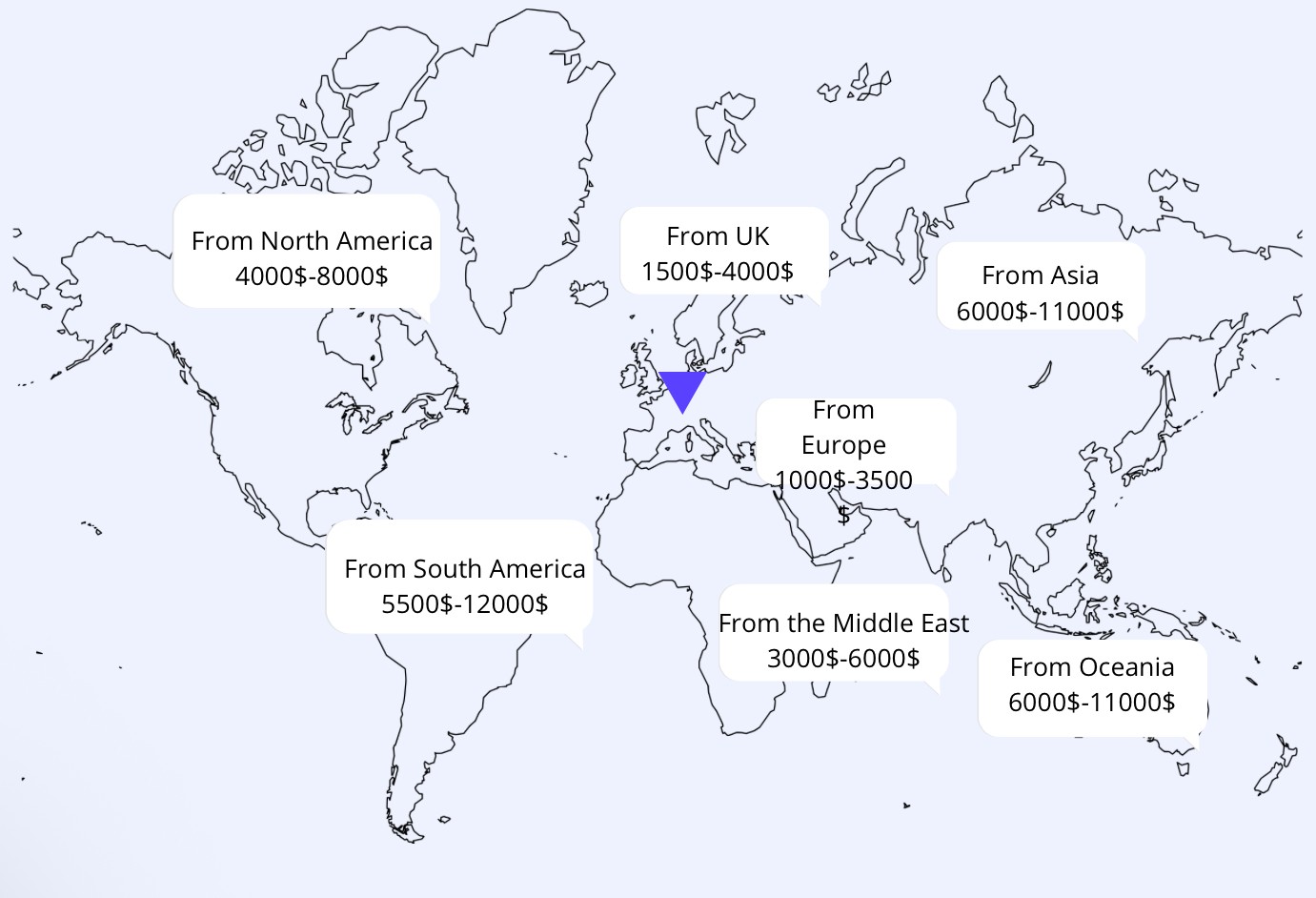
From within Europe: €1,000 – €3,500
From the UK: €1,500 – €4,000
From North America (USA/Canada): €4,000 – €8,000
From the Middle East: €3,000 – €6,000
From Asia/Oceania: €6,000 – €11,000
From Latin America: €5,500 – €12,000
Final pricing depends on your shipment size, whether you use a shared or full container, and optional services like packing, customs handling, or storage.
Factors that influence your moving cost
Distance and origin country
Volume of belongings (m³)
Transport method:
Sea freight – cost-effective
Air freight – faster but more expensive
Time of year: higher prices during summer and end-of-year moves
Additional services: packing, customs assistance, insurance, vehicle or pet transport, temporary storage
Typical examples
Move from France to Berlin with 10 m³: €1,200 – €2,000
Couple relocating from the USA to Munich with 20 m³: €5,000 – €7,500
Family moving from Australia to Hamburg with 30 m³: €8,000 – €12,000
A personalised quote will always provide the most accurate estimate for your relocation.
A Glimpse into History
Germany’s division after World War II left deep marks that are still visible today. West Germany developed under a capitalist system, while East Germany was under Soviet rule. When the country reunified in 1990 the gap didn’t disappear overnight. Its effects can still be felt, especially in jobs, housing, and attitudes.
Economically, the former East still lags behind. Wages are lower and on average the East is 20-25% poorer than the West. Many places in the East struggle with unemployment and population decline. On the plus side, housing is often more affordable in the East compared to the West, where real estate prices have skyrocketed.
Culturally, differences remain too. Some may be obvious with certain differences in food culture for example. Many of these differences however are not immediately obvious and are deep rooted by the 40 year separation. These political and cultural differences are extremely complex and we couldn't do it justice by putting it in a short message, but we highly recommend reading into the topic if you plan on moving to Germany.
Immigration Essentials
Before relocating to Germany, it’s important to address the legal requirements for residency. Here's a breakdown of what you need to know:
Determine Visa Requirements
The visa you'll need depends on your nationality and purpose of stay. Citizens of EU/EEA countries do not need a visa to live or work in Germany. If you are from a non-EU/EEA country, you may need one of the following:
Work Visa (for employment opportunities)
Study Visa (for enrolling in German educational institutions)
Family Reunification Visa (if joining a family member already residing in Germany)
Visit Germany’s Federal Foreign Office website to check your specific visa requirements and submit your application early, as the process can take weeks or even months.
Register Your Address
Upon arrival, register your new German address at your local Bürgeramt (Citizen’s Office) within two weeks. This step is needed for many official purposes, such as opening a bank account or obtaining health insurance. Don’t forget to bring:
A valid ID or passport
Rental agreement from your landlord
Completed Anmeldung (registration form)
Obtain Health Insurance
Germany has a mandatory health insurance system. Ensure you have valid health coverage before or shortly after completion of your address registration. You can choose between public and private health insurance based on your eligibility and needs. There will be more information about health insurance in Germany in our expense management guide.
Apply for a Residence Permit
If you require a higher-level permit such as for work or studying long-term, book a visa appointment at your local Ausländerbehörde (Foreigners' Office). Bring essential documents such as:
Proof of financial resources
Passport photos
Language certificates (if applicable)
Having all necessary paperwork ready will ensure smoother processing.


Securing Housing
Finding a place to call home in Germany is vital, and the housing market can be competitive. Start your search early by exploring these steps:
Key Housing Terminology
Understanding the terms used in German housing advertisements will make your search easier:
Kaltmiete (cold rent): Rent excluding additional charges
Warmmiete (warm rent): Rent including heating and utilities
Nebenkosten (additional costs): Extra expenses like water and maintenance fees
Signing the Lease
Once you’ve found a property, you’ll need to sign a Mietvertrag (rental contract). Pay close attention to:
Deposit amounts (commonly 2-3 months’ rent)
Duration and termination guidelines.
Rules stipulated by the landlord such as pet policies.
Utilities Setup
You’ll need to arrange services like electricity, gas, and Internet once you move in. Popular providers include:
Electricity/Gas: E.ON, Vattenfall.
Internet: Deutsche Telekom, Vodafone.
Make sure to compare providers for the best deals possible.
Understanding German Culture
Adjusting to the local culture is vital for integrating into German society. Here’s what you need to know:
Language
Although many Germans speak English, learning basic German phrases will prove valuable for day-to-day interactions. It's recommended to enrol in some language classes or use a language learning app. But here are some phrases that could help you get started in Germany.
Key Housing Terminology
Understanding the terms used in German housing advertisements will make your search easier:
Kaltmiete (cold rent): Rent excluding additional charges
Warmmiete (warm rent): Rent including heating and utilities
Nebenkosten (additional costs): Extra expenses like water and maintenance fees
Signing the Lease
Once you’ve found a property, you’ll need to sign a Mietvertrag (rental contract). Pay close attention to:
Deposit amounts (commonly 2-3 months’ rent)
Duration and termination guidelines.
Rules stipulated by the landlord such as pet policies.
Utilities Setup
You’ll need to arrange services like electricity, gas, and Internet once you move in. Popular providers include:
Electricity/Gas: E.ON, Vattenfall.
Internet: Deutsche Telekom, Vodafone.
Make sure to compare providers for the best deals possible.

Sponsors

APRIL International provides flexible international health insurance for expats, travelers, students, and businesses, offering worldwide coverage and easy access to quality healthcare.

Our currency exchange service helps individuals buying, selling, or maintaining overseas property with secure international payments and competitive exchange rates.

Abroad Experience connects international professionals with multilingual career opportunities in the Netherlands, offering recruitment support and career guidance.

Accountable simplifies tax management for freelancers in Germany with automated bookkeeping, real-time tax calculations, and direct tax submissions.

ActiveQuote is a health insurance comparison platform that helps individuals and businesses easily compare and choose the right health plans.
Aetna provides comprehensive health insurance plans for individuals, families, and businesses, including medical, dental, vision, and wellness solutions worldwide.

We connect people and businesses across cultures and languages, helping organizations build strong international relationships and expand globally.
AGILA provides pet health and liability insurance, helping pet owners manage veterinary costs with flexible coverage and fast reimbursements.

All Luxury Apartments connects travelers with premium apartments and villas worldwide, offering comfortable accommodation for business, leisure, and extended stays.

Approach People connects international companies with multilingual professionals through tailored recruitment solutions, executive search, and permanent or contract placements.
Load More


Start now