There's a version of relocation most people still picture when they hear the word: the full move, the packed truck, the new city, the new life. It's a commitment with a capital C, you sell or leave your lease, you ship your furniture, you update your address everywhere and mean it.
That version still exists. But it's no longer the whole story.
A quieter, faster-growing category has been building beneath it: temporary relocation. People and companies moving somewhere for three, six, or twelve months. Project-based assignments. "Rent first, buy later" transitions. Digital workers testing a new city before committing. Employees sent somewhere for a year who may or may not stay. The common thread is intentional impermanence, a move made with the understanding that permanence will be decided later.
It's not a niche anymore. And the economics behind it have fundamentally changed.
What we’ll cover
What “temporary relocation” really means in 2026
The data behind its rapid growth
Why more people are choosing short-term moves over permanent ones
The key forces driving this shift (work, housing, and flexibility)
How the relocation and housing market is adapting
What this means for your next move
MARKET SIZE GRWTH
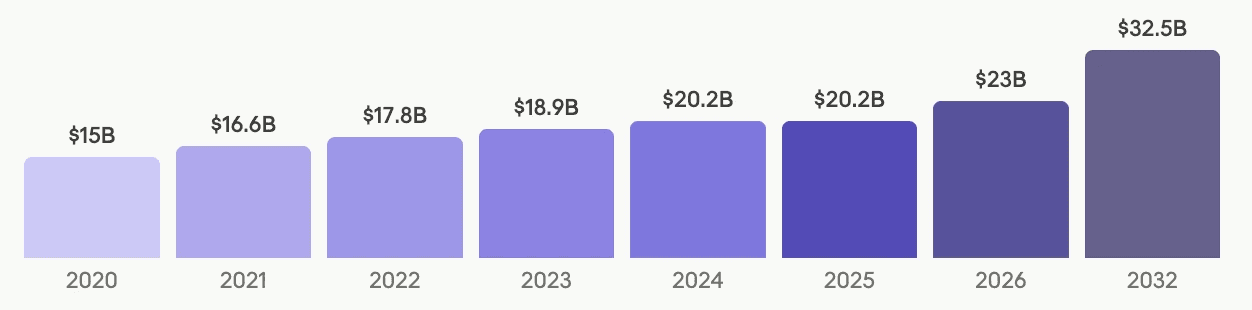
The corporate relocation services market is on track to hit $20.22 billion in 2025, up from $15 billion just five years ago, and is projected to reach $32.47 billion by 2032, a compound annual growth rate of around 7%. That's a market almost doubling in size in less than a decade.
The Employee Relocation Services industry in the United States alone has grown at a CAGR of 4.3% since 2020, with over 14,800 businesses operating in the space.
But inside these headline numbers, the most significant structural shift is the shortening of assignment timelines. Traditional long-term expatriate postings are declining as a share of total mobility. In their place, short-term assignments and project-based deployments are rising sharply. As Relocate Magazine put it in its 2025 trends report, "the lines between traditional business travel and longer-term relocations are blurring," driven by a surge in extended-stay products and a workforce that increasingly expects personalised, flexible experiences rather than standardised packages.
Companies are responding. 41% of UK firms now use project-based mobility policies, reflecting a global pivot away from the old one-size-fits-all relocation contract.
Why people are choosing temporary over permanent
Mortgage RatesAt 6.76%, buying a home immediately after a move costs approximately 30% more per month than renting. Temporary stays give people time to evaluate the market before making a long-term commitment. 6.76% average mortgage rate (2025) | Hybrid Work68% of companies have adjusted their real estate strategies to support hybrid work models, making trial periods in new cities a practical option rather than a temporary workaround. 68% of firms (2025) |
Talent ShortagesOrganizations are struggling to fill roles locally and are increasingly deploying talent on short-term assignments instead of requesting permanent relocations. Employees are becoming more receptive to this flexibility. 5.2% industry CAGR since 2020 | Project-Based Policies41% of UK companies now use project-based mobility policies. Traditional open-ended assignments are being replaced by clearly defined scopes, timelines, and objectives. 41% of UK firms |
It's not just companies driving this. Individuals are making the same calculation, and the mortgage market is a major reason why.
With U.S. mortgage rates holding steady at 6.76% as of spring 2025 (Freddie Mac), buying a home in a new location immediately after relocating carries real financial risk. Monthly ownership costs run roughly 30% higher than rental equivalents at current rates. The "rent first, buy later" approach has become standard practice for smart relocators. It lets people test a city, understand neighborhoods, and make permanent housing decisions with information rather than pressure.
This has fed explosive demand for mid-term rentals, furnished leases of one to twelve months. The most common durations are six months (35% of mid-term contracts), three months (25%), and nine months (20%), according to rental market data. For this segment, the appeal is simple: it sits between the cost-effectiveness of a long-term lease and the flexibility of a short-term stay. Utilities are often included, furniture is provided, and there's no twelve-month commitment.
Who is doing temporary relocations:
Corporate Assignees Short-term postings are replacing traditional long-term expatriate packages. | Digital Nomads Remote workers are testing cities before committing to a permanent base. | Relocating Families Families are renting first to evaluate schools, neighborhoods, and overall community fit. |
Travel Nurses Healthcare professionals are taking on 13–26 week assignments across different states and regions. | Between-Home Movers Individuals bridging the gap between a home sale, renovation project, or dual-household transition. | New Hires Employees are testing both a new role and a new city before making long-term housing decisions. |
The structural forces accelerating the trend
Several forces have converged to make temporary relocation not just possible but preferable.
Hybrid work has redefined proximity. In 2025, 68% of companies have modified their real estate and relocation strategies for hybrid models. When employees no longer need to commute daily, a temporary base in a new city is a viable test. If the city works, they stay. If it doesn't, they move on. The cost of being wrong is lower.
Talent shortages are forcing creative mobility. The U.S. Employee Relocation Services industry has grown at a 5.2% CAGR since 2020 partly because companies can no longer find the right talent locally. They're deploying people from other regions and cities on defined-term assignments rather than asking them to permanently uproot for a role that might not last.
Housing affordability is suppressing permanent moves. Almost 30% of workers declined a relocation in 2025 specifically because of unaffordable housing costs, according to the 2025 Global Mobility Survey conducted across 19 countries. Temporary relocation offers a way in without the financial exposure of immediate purchase. It preserves optionality.
Corporate lease lengths are shrinking. The average commercial lease fell from 7.5 years to just 4.8 years between 2013 and 2024, a 36% drop. Companies are committing to locations for shorter periods, and their workforce mobility strategies are following suit.
The housing market that's grown up around it
One of the clearest signals of how mainstream temporary relocation has become is the infrastructure now built around it.
Mid-term rentals are now a deliberate investment category. Platforms like Furnished Finder, which began serving travel nurses, have expanded to serve the broader professional relocation market. Airbnb's "monthly" tier has scaled into a genuine product line. Corporate housing providers have added flexible lease terms and furnished inventory at scale. Major relocation companies like SIRVA now run dedicated corporate housing divisions with automated bidding systems across national networks.
The multifamily real estate sector has taken notice. Corporate housing providers and property managers are increasingly building flexible inventory specifically for the 1–12 month segment, recognizing that it combines the occupancy stability of long-term rental with pricing closer to short-term rates.
What it means for people planning a move
Factor | Temporary Relocation | Permanent Relocation |
|---|---|---|
Commitment | 1–12 months, defined scope (Flexible) | Open-ended, full move (Long-term) |
Housing | Furnished mid-term rental, all-in cost (Lower risk) | Purchase or long-term lease, full market exposure (Higher risk) |
Cost | Approximately 30% lower monthly cost compared to homeownership at current rates | Full purchase costs, closing fees, and ongoing ownership expenses |
Optionality | Easy to exit if the role ends or the city isn't a good fit (High) | Difficult and costly to reverse quickly (Low) |
Corporate Support | Short-term assignment policy, project-based budget | Full relocation package, home sale assistance |
If you're considering a relocation and the permanent version feels daunting, the temporary version may not be a compromise. It may be the smarter sequence.
Moving temporarily first gives you time to evaluate schools, neighborhoods, commute times, and community before locking into a purchase. It keeps housing costs lower while you assess the job or assignment. And if the situation changes you exit cleanly.
For companies managing workforce mobility, the shift has a different implication: the expectation employees bring to relocation packages has changed. They want flexibility over lump sums, targeted support over generic benefit menus, and housing solutions that account for the reality of 2025's rental and purchase markets.
The traditional full relocation package, designed for a world where you moved once and stayed, is no longer the only product. The workforce has decided it wants something more iterative. And the market, very quickly, has built it.



Start now
More like this