

From the golden beaches of the Algarve to the cobbled streets of Lisbon and the historic charm of Porto, Portugal is a country that blends rich heritage with modern living.
But before you start exploring, it’s smart to understand how to manage your money.
Whether you’re a tourist, student, or planning a longer stay, this guide will help you navigate Portugal’s currency system, get the best exchange rates, and avoid unnecessary fees in 2026.
Understanding the Euro (€)
Portugal’s official currency is the Euro (EUR, €), shared by 19 other countries in the Eurozone.
The Euro replaced the Portuguese escudo in 2002, making it easy for travelers to move between European countries without changing money multiple times.
The Euro is one of the world’s strongest and most stable currencies, and its use simplifies travel throughout the EU.
Euro Denominations
The Euro comes in banknotes and coins:
Banknotes: €5, €10, €20, €50, €100, €200, and €500
(Notes of €200 and €500 are rare and not commonly accepted in small shops.)
Coins: €1 and €2, plus 1, 2, 5, 10, 20, and 50 cents
Tip: Coins are useful for public transport, restrooms, and tolls always keep a few on hand.
Exchange Rates for Common Currencies
Exchange rates fluctuate daily, but here’s a general idea for 2026:
1 USD (US Dollar): ~€0.91
1 GBP (British Pound): ~€1.18
1 AUD (Australian Dollar): ~€0.59
1 CAD (Canadian Dollar): ~€0.66
1 CHF (Swiss Franc): ~€1.04
1 JPY (Japanese Yen): ~€0.0061
100 INR (Indian Rupee): ~€1.09
Always check live rates using XE.com, Wise, or your bank’s app before exchanging.
Should You Carry Cash in Portugal?
Portugal is largely card-friendly, but cash is still handy, especially in smaller towns or local markets.
Most urban areas, hotels, and restaurants accept cards, but there are still times when you’ll want some Euros in your pocket.
Here’s when cash can be useful:
Local cafés and markets: Many small shops prefer cash for small purchases.
Taxis and local transport: Not all drivers accept cards.
Rural areas: Villages and local stalls might not have card terminals.
Tipping and small transactions: Rounding up the bill or leaving a few coins is appreciated.
Safety tip: Portugal is generally very safe, but keep small amounts of cash (around €50–€100) and avoid flashing large bills in busy areas.
Where to Exchange Currency in Portugal
1. Banks
Banks like Caixa Geral de Depósitos, Millennium BCP, Novo Banco, and Santander Portugal are reliable and offer competitive rates.
You’ll need your passport or ID to exchange money.
Most banks are open Monday to Friday, 8:30 a.m.–3:00 p.m.
2. Currency Exchange Offices
Currency exchange offices (casas de câmbio) are found in city centers, airports, and tourist zones.
They’re convenient, but rates and fees vary — compare before exchanging large sums.
Avoid tourist-heavy kiosks, which may offer poor rates.
3. ATMs
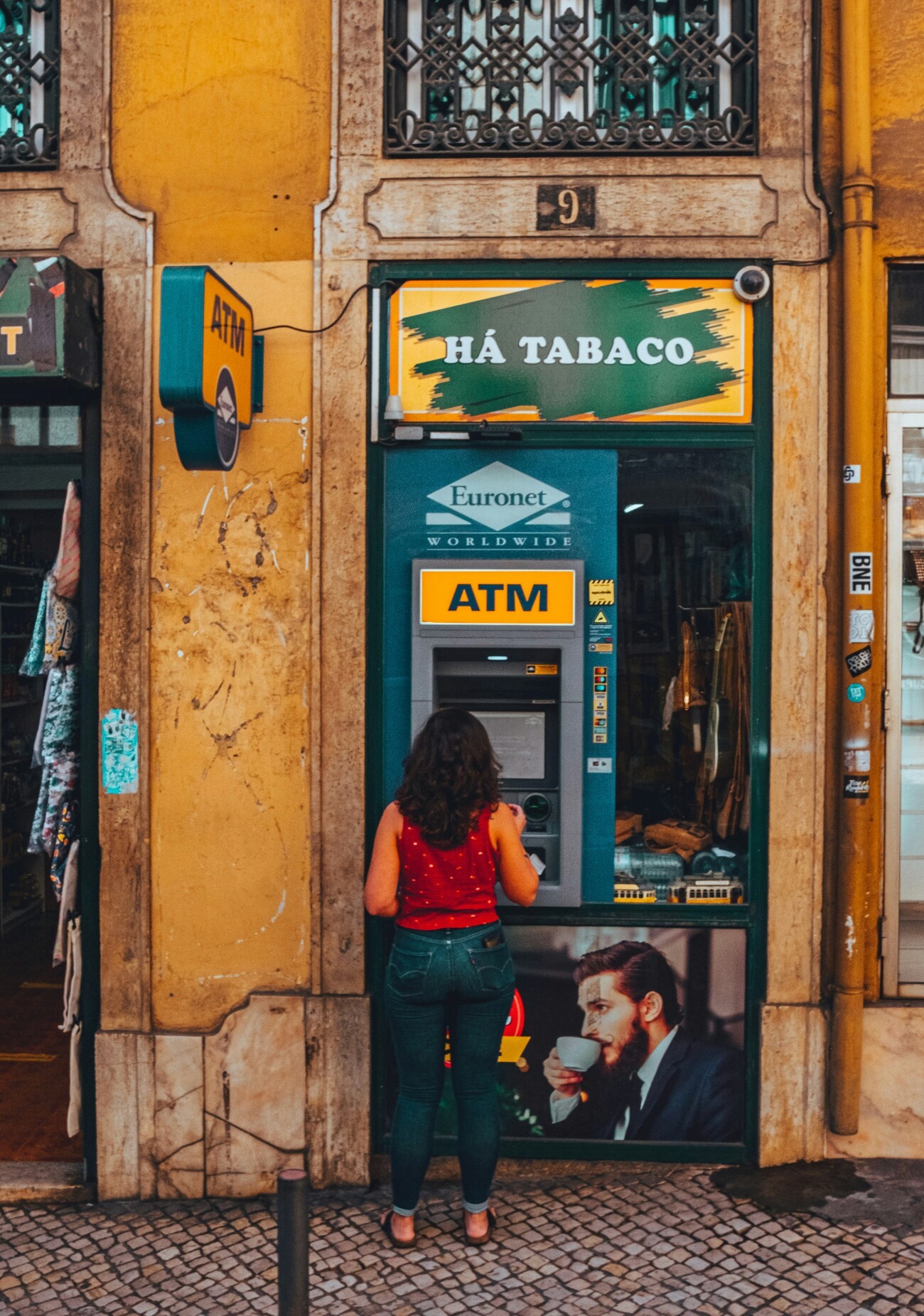
ATMs (Multibanco) are everywhere and usually offer the best exchange rates when withdrawing directly from your card.
These machines are operated by major banks and are safe to use.
Important: Always select “Charge in Euros (EUR)” instead of your home currency, this avoids dynamic currency conversion fees.
4. Prepaid & Online Currency Services
Digital tools like Wise, Revolut, and Monzo are great options for travelers.
They allow you to convert and hold Euros before your trip, offering better exchange rates and lower transaction fees.
5. Avoid Airports & Hotels
Airport and hotel exchanges are convenient but usually have the worst rates and high commissions.
If possible, exchange a small amount for immediate needs, and handle the rest in town.
Tips for Currency Exchange in Portugal
Compare exchange rates: Check online or with multiple providers before exchanging.
Use ATMs for the best rate: Stick to major bank ATMs and avoid third-party machines.
Avoid dynamic currency conversion: Always pay in Euros, not your home currency.
Use mobile payments: Apple Pay, Google Pay, and MB Way (a popular Portuguese app) are widely accepted.
Keep smaller bills and coins: Some shops and taxis won’t accept large notes.
Notify your bank: Let them know you’re traveling to avoid card issues abroad.
Ask for receipts: Especially when exchanging large amounts, to confirm the rate and fees applied.
Frequently Asked Questions
1. Do I need Euros in Portugal?
Yes. The Euro (€) is the only accepted currency in Portugal.
2. Can I pay with USD or GBP?
No, foreign currencies aren’t accepted in stores or restaurants. You’ll need to exchange Euros.
3. Are credit and debit cards accepted everywhere?
Most places accept Visa and Mastercard, but smaller vendors might be cash-only.
4. Does Portugal support contactless and mobile payments?
Yes, contactless and mobile payments are common, especially in cities. MB Way, Apple Pay, and Google Pay are widely used.
5. What’s the best way to avoid high exchange fees?
Use bank ATMs or multi-currency cards (Wise, Revolut) and avoid airport exchanges.
6. Is tipping common in Portugal?
Tipping is not obligatory, but rounding up or leaving 5–10% for good service is appreciated. Small coins are best for casual tips.
Final Thoughts
Managing money in Portugal is easy once you know how to navigate the Euro system.
With a mix of digital payments and a bit of cash for small purchases, you’ll have no trouble enjoying your stay.
By comparing rates, avoiding unnecessary fees, and keeping smart payment habits, you’ll stretch your travel budget further, whether you’re sipping wine in Porto, surfing in Nazaré, or watching the sunset in Lisbon.

The how
>
.000
Cases yearly
+
Active countries
.
/5
Excellent rating
+
Companies use us
OTHER SERVICES