

Across global moving markets, a major shift in consumer behaviour is reshaping how movers win business. Today’s transferees expect the same speed, transparency, and digital convenience they receive in other service industries. They compare multiple movers instantly, expect fast responses, and have little patience for unclear information or slow communication.
In practice, this means the mover who delivers the fastest, cleanest, and most professional response almost always secures the booking. Customers make decisions within hours so relying on manual intake or slow follow-ups is no longer viable.
Digitisation is now the main driver pushing the industry forward, and movers who adapt their enquiry-to-booking pipelines gain a significant competitive advantage.
What This Article Covers
The digital shift transforming enquiry-to-booking for movers
Why structured intake improves lead quality and protects margins
How quoting speed directly impacts conversion
Practical steps movers can take to modernise their pipeline
How Relocately strengthens digital enquiry intake
Do you want to join the digitization trend?
How Digital Platforms Simplify Lead Intake
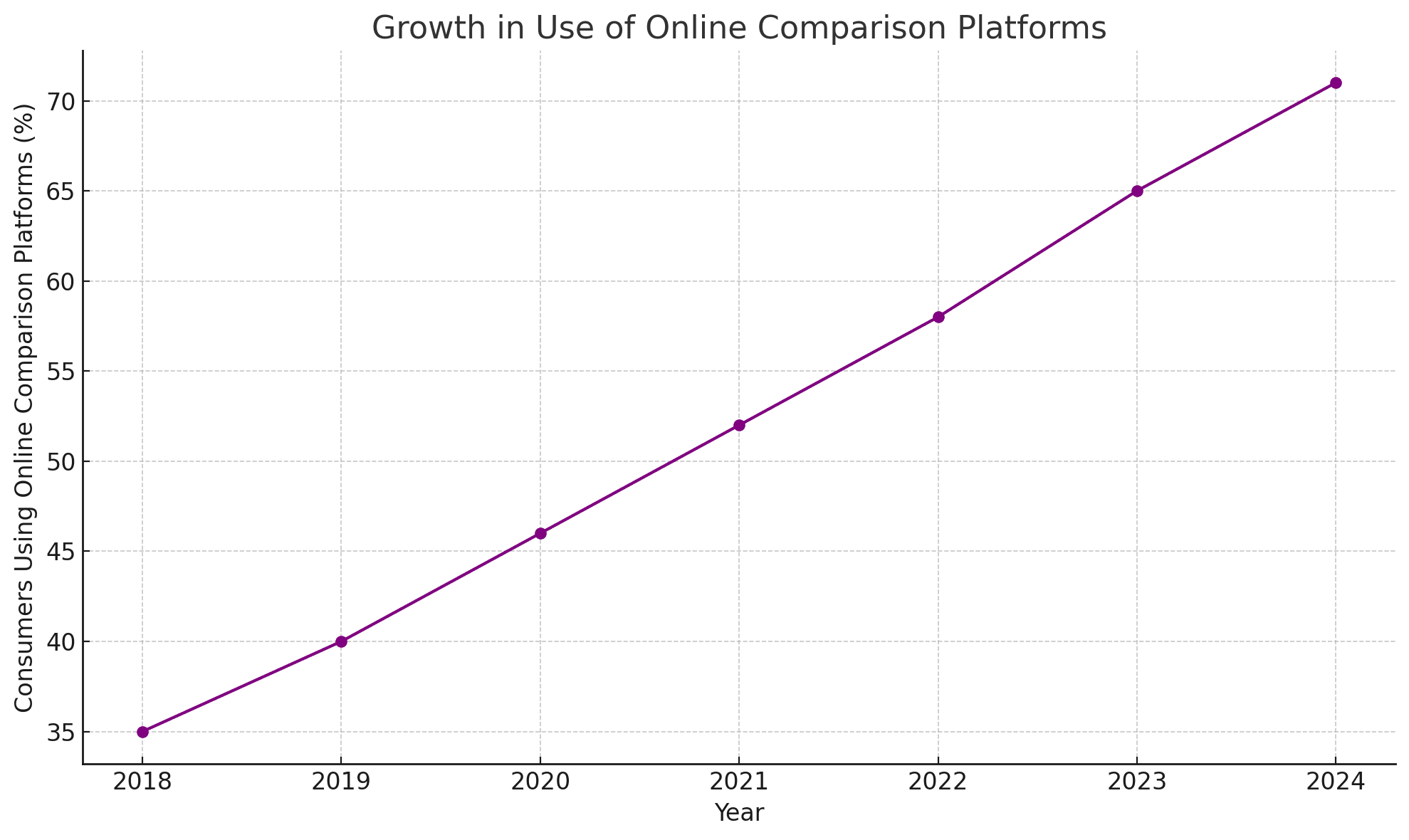
Over the past decade, consumers have dramatically transformed the way they evaluate and select services. Instead of relying on traditional sales interactions, people increasingly turn to online comparison platforms to guide their decisions. Whether booking travel, choosing insurance, or hiring service providers, users expect transparency, speed, and the ability to compare multiple options instantly. This behavioural shift has reshaped entire industries, and the moving sector is no exception.
According to the International Relocation Market Outlook, more than 70% of transferees decide which companies to contact before ever speaking to a representative, meaning the digital experience determines who makes it onto their shortlist. In today’s market, the first digital impression often defines whether a mover is even considered.
As digital habits mature, consumers are becoming more independent in their research and more selective in how they engage with companies. They expect relevant information immediately, and they abandon providers who cannot deliver it. The growth of comparison platforms reflects this demand for efficiency and clarity: each year, more customers prefer to evaluate movers, prices, and service levels online before ever speaking to a sales representative. Customers now reward efficiency and clarity, and penalise any company that slows down their decision-making.
For international movers, this shift is especially important. Transferees are making high-stakes decisions under time pressure, often across borders. Naturally, they gravitate toward digital environments where information is structured, options are clear, and responses are fast. Movers that meet these expectations attract not just more enquiries, but more high-intent, conversion-ready customers.
1. Intent Verification
Online moving leads come in high volumes. Verifying which to contact instantly and which to nurture via short calls or emails is key to make sure you don't waste resources on trying to convert leads right now that are actually in the orientational phase. Non-verified leads don’t just waste time, they disrupt planning, slow down the quoting pipeline, and create operational uncertainty.
Many movers spend countless hours chasing enquiries that:
Are in the orientational phase
Are not aware of move requirements
Lack key information (volume, access, timelines, service level)
Structured digital intake and verification ensures movers allocate their resources to leads that are ready to book and move instead of customers that are still in the beginning phase of figuring out what is needed. It enables companies and their teams to focus on customers who are genuinely ready to book.
Movers who adopt structured intake often report a significant drop in ‘wasted resources’ and a noticeable improvement in sales effectiveness. However, they should not underestimate the value of lower intent customers, they should just take a different approach to these customers.
If you want to know more about following up efficiently on leads in the orientation phase, you should read our article Utilizing a Drip Campaign to Convert 20% More Leads.
2. Accurate Intake
Accurate intake is one of the most critical pillars in protecting a mover’s margins. Underquoting remains a major commercial risk, and in most cases, the reasons are entirely predictable. When essential lead details are missing, movers often find themselves misaligned with customer expectations.. This creates avoidable operational stress and puts profitability at risk.
Movers frequently face challenges such as:
Underestimated volume
Unreported special items
Misunderstood access conditions
Incorrect or missing service-level details
Each of these issues compounds quickly. A job quoted too low can become unprofitable by the time container rates shift, partner charges update, or unexpected labour needs arise. In a market where margins are increasingly tight, even small inaccuracies can significantly impact overall commercial performance.
How digitisation helps
Structured, digital intake captures essential data completely and consistently from the start, eliminating guesswork and reducing the dependency on back-and-forth communication. With accurate, validated information:
Volume and inventory data become more reliable
FCL/LCL calculations are more precise
Crew, materials, and vehicle planning become straightforward
Operational surprises on pack day are dramatically reduced
The result is a predictable quoting process that safeguards margin integrity, even across volatile international lanes.
3. Quoting Speed
In today’s digital-first moving market, speed is no longer a luxury—it’s a decisive competitive advantage. Transferees compare options quickly and make decisions fast, especially when relocating under time pressure. While accuracy and quality still matter, the mover who delivers the first complete, transparent, and professional quote frequently wins the booking.
Most quoting delays stem from preventable bottlenecks:
Chasing missing information
Unclear or inaccurate volume estimates
Scheduling physical surveys
Waiting for partner rates
When these slowdowns accumulate, the entire sales pipeline stalls. And in highly competitive lanes such as:
UK–AU
EU–US
US–EU
…customers often select the provider who responds first with a complete, trustworthy proposal.
How digitisation helps
Digital enquiry platforms eliminate the guesswork that causes quoting delays. Movers receive clean, structured data from the moment the enquiry enters the system, enabling sales teams to respond faster and with greater confidence.
With fewer clarifications required:
Quotes that once took days can be turned around in hours
Sales teams can handle more enquiries without increasing workload
Customers receive a smoother, more modern experience
On competitive routes, speed often determines the winner. Digitisation ensures movers are the first to deliver a reliable quote, and therefore the first to secure the booking.
Want to know more about structured intake and improved quoting speed?
What Movers Can Do Now
In an era of rapid digitisation, where consumers expect to research, compare, and book services online, movers must modernise their processes to stay competitive. Transferees no longer tolerate slow callbacks or long email chains; they choose companies that deliver immediate clarity, transparent pricing, and a frictionless digital experience.
To succeed, movers need structured enquiry-to-booking processes, including intent-based lead filtering, accurate data collection, and fast, professional responses. However, many struggle to define where to begin, making it crucial to understand which details to gather upfront, how quickly to respond, and what can be automated.
Modernising these workflows not only reduces operational friction, it significantly boosts win rates, strengthens customer satisfaction, and makes the business more resilient and scalable in a highly competitive market.
1. Standardise Required Enquiry Data
Every enquiry should include:
Full addresses
Timeline and move dates
Access information
Volume estimate or pre-survey details
Special requirements
Having these data points upfront removes the majority of preventable quoting delays and reduces operational risk. It also ensures that sales teams spend far less time requesting clarifications and more time issuing accurate, competitive quotes.
Why this matters:
Unverified leads consume time, attention, and operational capacity without contributing to revenue. When sales teams chase customers who are still in the orientational phase, they delay responses to those who are actually ready to book. This misallocation slows down the entire quoting pipeline and increases the cost per converted lead.
Expanded benefits:
Focus: Sales teams spend more time on high-intent customers.
Conversion: Resources are allocated to leads who are ready to move now.
Experience: Orientation-phase customers receive nurturing rather than pressure, which builds trust.
2. Set Internal Follow-up Targets
Movers should define clear follow-up standards for their priority leads. For example: EU–AU, EU–US, US–EU → Follow up within six hours
With structured intake, these targets become realistic. Faster and more consistent follow-ups directly correlate with higher conversion rates, especially on competitive routes where customers tend to engage first with the mover who responds quickly and professionally.
Why this matters:
Slow or inconsistent follow-ups are one of the quickest ways to lose high-intent customers. Delays create space for competitors to respond first, while unclear communication can undermine trust early in the sales process. Missed or late follow-ups often result in lost bookings, reduced customer confidence, and unnecessary strain on sales teams.
Expanded benefits:
Conversion: Timely follow-ups keep transferees engaged and reduce drop-off.
Professionalism: Fast responses signal professionalism and reliability.
Reduced risk: Standardised follow-up timelines prevent missed opportunities.
3. Review Lane Performance Quarterly
Movers should analyse:
Which lanes convert best
Which flows maintain healthy margins
Which enquiry sources deliver high-quality, book-ready leads
A quarterly review prevents commercial blind spots. By identifying underperforming lanes early, movers can adjust pricing, set expectations with partners, or redirect focus to more profitable segments. This discipline turns the sales funnel into a more predictable and controllable revenue stream.
Why this matters:
Quoting speed is now one of the strongest predictors of who wins the booking. Transferees often accept the first complete and reliable quote they receive. Slow responses, caused by missing information, delayed surveys, or partner dependencies, push potential customers directly into the hands of faster competitors.
Expanded benefits:
Higher conversion: Faster quotes dramatically increase win rates on key lanes.
Reduced lead drop-off: Customers stay engaged when they receive quick answers.
Stronger competitive positioning: Movers outperform slower competitors by default.
More predictable sales cycles: Fewer delays mean smoother internal workflows.
Better customer satisfaction: Quick responses build confidence and credibility.
4. Use Survey Automation Tools
Tools such as:
Video surveys
Photo-based inventories
Digital volume estimators
…reduce the need for physical surveys and significantly improve accuracy.
Why this matters:
Traditional surveys often cause friction, customers need to schedule a time, movers need staff availability, and the back-and-forth slows down the quoting process. Automated tools eliminate these bottlenecks.
Expanded benefits:
Data collection: Customers can submit inventories instantly, at any time of day.
Accuracy: Standardised volume estimates, reducing the risk of underquoting.
Scalability: Sales teams can handle more enquiries without increasing headcount.
When combined with automated follow-ups, document sending, and customer verification, movers can reduce manual workload dramatically while offering a smoother, more transparent customer journey.
Utilizing Relocately In The Digitization Shift
Relocately helps movers modernise the earliest stage of the moving process: enquiry intake. By capturing complete, validated customer information from the start, the platform removes the manual back-and-forth that slows down quoting and creates operational risk. Movers receive structured, accurate data immediately, allowing them to prioritise high-intent customers, respond faster, and plan more confidently.
With built-in filtering, automated checks, and a customer-friendly digital flow, Relocately turns enquiry handling into a predictable, efficient, and scalable process. Instead of chasing incomplete leads, teams can focus on delivering accurate quotes, protecting margins, and offering a smoother customer experience.
Rather than replacing mover expertise, Relocately strengthens the commercial foundation that determines conversion, profitability, and overall workflow quality.
In summary, Relocately:
Captures complete, validated customer information
Filters enquiries by preferred lanes and volumes
Enables faster, more accurate quoting
Reduces manual administrative work
Improves conversion rates
Enhances customer experience consistency
Because Relocately is built specifically for international relocation, it reflects the operational realities movers face daily, from lane volatility and customs complexity to packing-crew constraints and partner-agent coordination.
The purpose is not to replace mover expertise, but to strengthen the commercial processes that directly influence profitability.
Conclusion: Movers Who Digitise Will Lead the Market
Digital platforms, especially those built for global relocation, like Relocately, help movers operate with greater control, clarity, and commercial discipline.
Those who modernise now won’t just survive industry volatility, they will set the standard for how international moving is done in the years ahead.
Movers who adopt digital enquiry intake and structured data workflows benefit from:
Accurate, efficient lead processing
Faster, more accurate quoting
Higher conversion rates
Less waste of commercial resources
By embracing digitisation now, movers position themselves not just to keep up with customer expectations, but to consistently outperform competitors in speed, accuracy, and service quality. The organisations that modernise their enquiry-to-booking workflow will capture more revenue, protect their margins, and deliver a smoother experience end-to-end. In a rapidly evolving global market, digital movers won’t just adapt, they will lead.
Sources
EY, Mobility Reimagined Survey: How can workforce mobility be a critical bridge to solve talent gaps?, 2024, https://www.ey.com
Harvard Business Review, The Short Life of Online Sales Leads, 2011, https://hbr.org
McKinsey & Company, Customer experience in the next normal after COVID-19, 2020, https://www.mckinsey.com
Want to lead the market by digitizing your lead inflow?



Verkäufer
Mehr davon